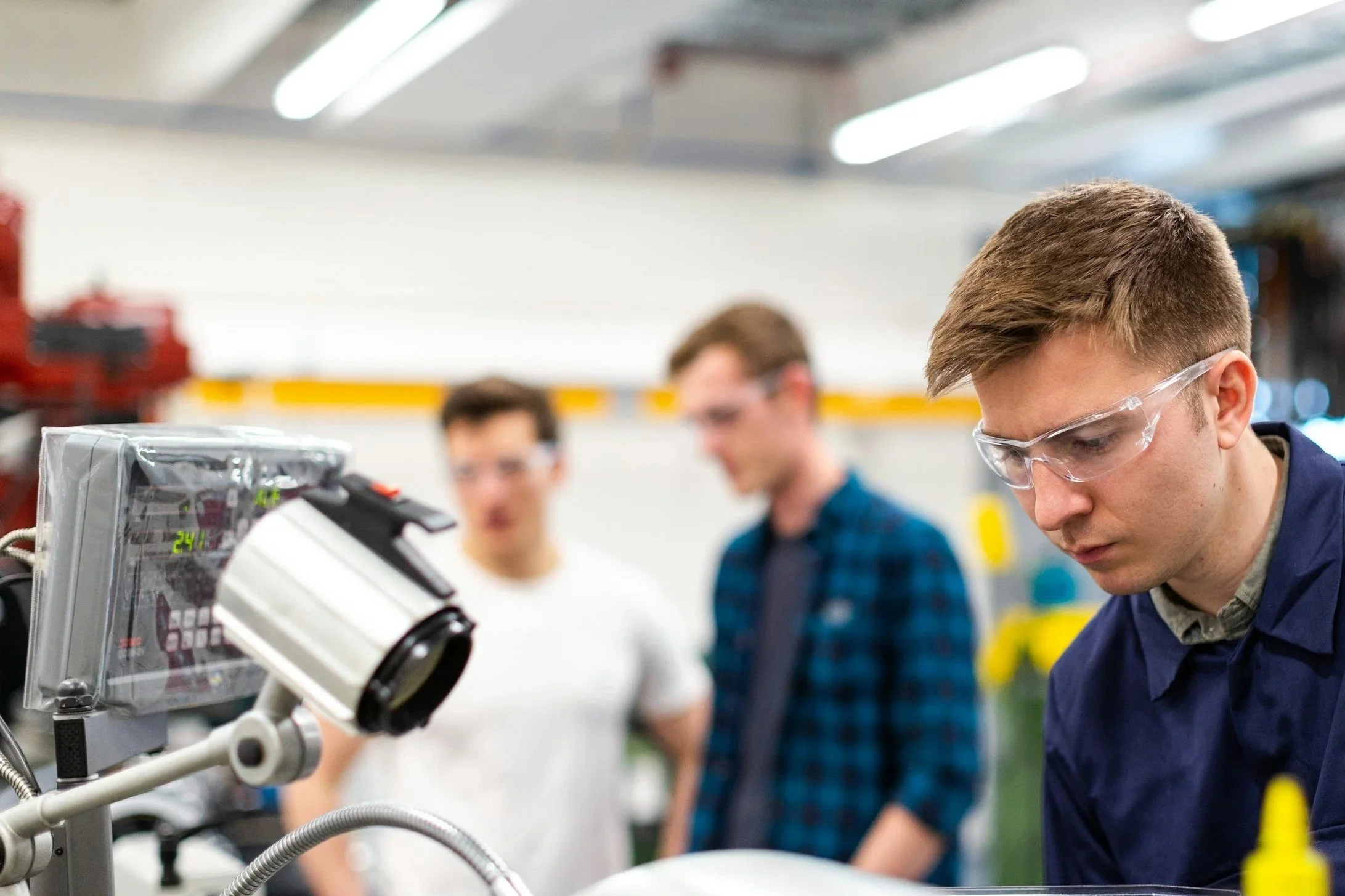
Young Workers, Work Experience and Apprentices
Young people can be more at risk in the workplace due to inexperience, lack of awareness and maturity. When you have under-18s on site additional controls may be required
Protecting Young People At Work
Risks to Young People
Young workers are more vulnerable to harm because they may:
Be unfamiliar with workplace hazards and safe systems of work
Lack confidence to ask questions or challenge unsafe situations
Be eager to please and take on tasks beyond their capability
Not yet have the physical strength or coordination for certain tasks
They may also be more affected by exposure to:
Machinery and moving equipment
Hazardous substances
Noise, vibration or extreme temperatures
High-risk environments such as farms, workshops or construction area
Risk Assessment Requirements
Always review your existing Young Persons Risk Assessment and Checklist:
Before a young person starts work with you
If you have not had young workers on site before
If the work involves higher risks
If the individual has specific needs
For Molstan clients, the Young Persons Risk Assessment and Checklist is available on your portal
How can risks be controlled?
Before a young person starts, you should review the work they will be doing and ensure controls are suitable for their age and experience
Key controls include:
Task suitability - only assign work appropriate to their capability
Clear induction - explain hazards, site rules and safe behaviours
Close supervision - particularly during early stages
Simple instructions - avoid assumptions about prior knowledge
Restricted activities - do not allow use of prohibited or high-risk equipment
Remember: controls suitable for experienced adults may not be sufficient for a young person
Supervision and Training
Young people require a higher level of supervision than experienced workers
You should ensure:
They are supervised by a competent and responsible person
Instructions are clearly understood
Training is practical and relevant to the tasks they will carry out
They know who to speak to if they are unsure, concerned or need help
Apprentices Under 18
Apprentices under 18 must be managed in the same way as other young workers:
The employer remains responsible for their health and safety
Training providers may check arrangements, but primary responsibility sits with the business
Tasks and exposure should be introduced gradually and safely
Work Experience Placements
For work experience students:
Treat them as employees for health and safety purposes
Provide a suitable induction before they start
Explain key risks and control measures clearly
Liaise with the school/organiser where required
Existing employers’ liability insurance will usually cover placements, but this should be confirmed
PPE (Personal Protective Equipment)
Where PPE is required:
It must be suitable for the individual, including correct size and fit
The young person must be trained in how to use it properly
Supervisors should check it is worn correctly at all times
Do not assume standard PPE will fit younger workers correctly.
Equipment, Machinery and Restrictions
Some equipment and tasks may not be suitable for under-18s, particularly where:
Specialist training or certification is required
There is a high risk of serious injury
Legal age restrictions apply
Always check before allowing a young person to operate machinery or equipment.
Key points
When under-18s are on site, focus on:
Appropriate tasks
Clear instruction and induction
Strong supervision
A risk assessment that reflects their age and experience
With the right controls in place, young workers can gain valuable experience safely