Risks
Crushing or entrapment injuries
Muscle strain and back injuries from manual handling
Hearing damage from air tools
Hand Arm Vibration Syndrome (HAVS)
Cuts or fractures from falling components or tools
Explosions
Fatalities
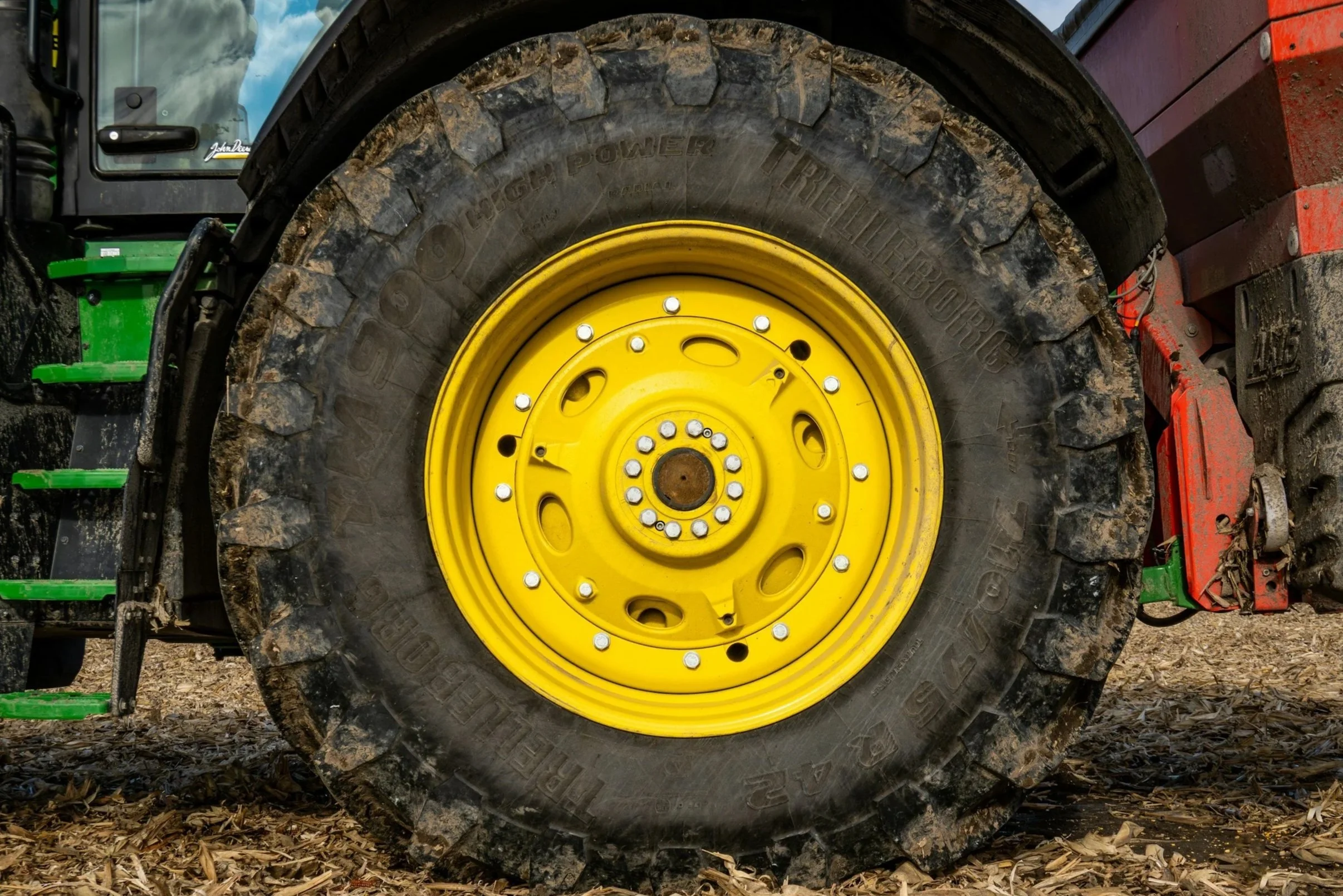
Changing Wheels and working with agricultural tyres can expose workers to serious injury if the correct procedures are not followed
Agricultural Vehicle Wheel Changing and Tyre Safety
How can risks be minimised?
Use the Safe Stop procedure
Always work on firm / level ground: use plates if necessary
Use suitable hydraulic jacks and secure axle / cab stands
Inspect equipment before use
Identify wheel weights / water ballast before attempting to remove
Do not remove a wheel unless it can be supported by the operator or with assistance
When inflating a tyre do not stand facing the wheel rim: stand adjacent to the cleats
Use wheel changers and locking systems for large wheels
Torque wheels to manufacturer’s settings using calibrated tools
Wear the correct PPE
Safety checks
Always double check stability before working beneath supported equipment
Do not exceed the working limits of lifting equipment
Ask for help when handling large or awkward wheels
Record HAVS exposure if using air tools regularly
Correct PPE
Safety boots (EN ISO 20345)
Work gloves for grip and hand protection
Hearing protection when using air tools
Eye protection for air tool use or where there is risk of flying debris
In the event of injury
Isolate equipment before assisting an injured person
Provide First Aid and seek medical help
In case of entrapment or crushing, stop all work and call the emergency services